Tenerife’s postcard is beach and volcano, but its memory lives in small towns, and the west coast puts you unusually close to the real thing. Details and dates below were verified in July 2026; fiestas move with the church calendar, so confirm the day before driving.
Start ten minutes away: Arguayo
The hamlet of Arguayo, just up the valley, holds the most local tradition of all: the Centro Alfarero “Cha Domitila”, a working pottery centre and museum where ceramics are still made the pre-Hispanic way — no wheel, coils of clay smoothed with seashells, fired in a single-chamber kiln. It is named for the last potter of the old line, entry is free per the current listings (the municipal office confirms demonstration times), and the pieces on sale were made in the room you’re standing in. Closed Mondays.
Towns worth the drive
- La Laguna (~70 min) — a UNESCO World Heritage town since 1999: the unfortified grid that became the template for Spanish colonial cities in the Americas, best absorbed by simply walking Obispo Rey Redondo and San Agustín.
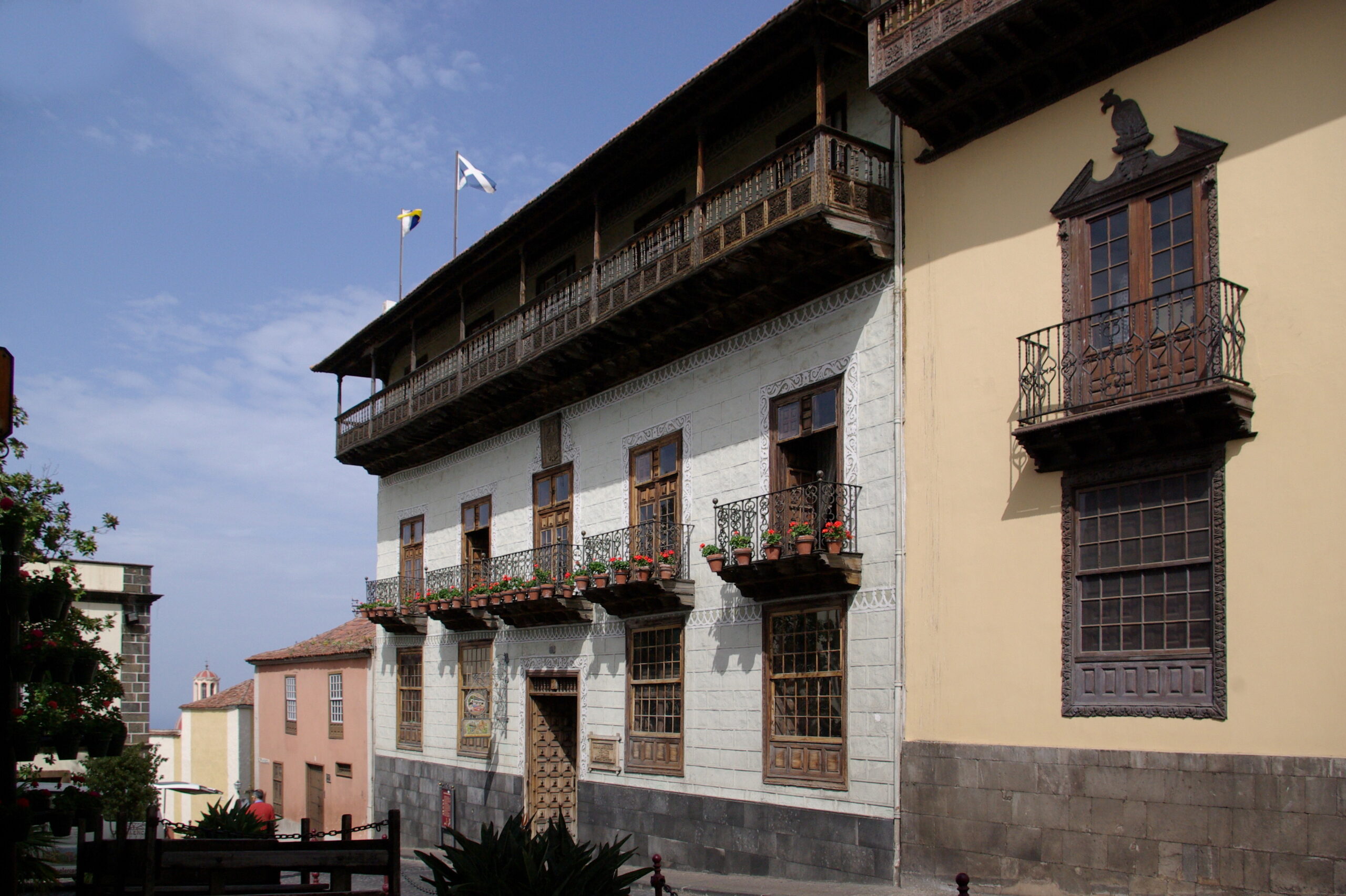
- La Orotava (~55 min): mansions and the celebrated Casa de los Balcones (from about €6, with a combined ticket for a 16th-century gofio mill). In June the town lays its famous flower and volcanic-sand carpets for Corpus Christi, usually the octave Thursday, confirmed by the town hall each spring.
- Vilaflor (~45 min) is, at roughly 1,400 m, the highest village in the Canaries (one of Spain’s highest, whatever some guides claim) and home of the roseta needle-lace still made around the church square.
- Candelaria (~60 min) — basilica of the islands’ patroness, guarded by nine bronze Guanche kings along the seafront; on the night of 14–15 August, pilgrims walk here from across the island.
- Garachico, Icod, Masca and Taganana are each covered in our other guides; all four reward slow feet and a café stop.
Traditions you can actually attend
Romerías — harvest pilgrimages with ox-carts, traditional dress and food handed down from the wagons — run from late April to September; Los Realejos and La Orotava host two of the biggest (both fell in May–June this year), and Santiago del Teide holds its own each July. Lucha canaria, the islands’ sand-ring wrestling, has a lovely local twist: in 2025 Santiago del Teide registered its first federated club in forty-two years, with home bouts at the municipal pavilion behind the town hall — check the ayuntamiento for fixture nights. And from roughly November to spring, the north opens its guachinches: family wine taverns limited by rule to their own harvest and a maximum of three home-cooked dishes, found by handwritten roadside signs. Cash, shared tables, no menus — the least commercial dining experience on the island.
One more for the calendar: on 29–30 November, Icod de los Vinos celebrates San Andrés by sending its youth hurtling down the steep streets on waxed wooden boards while the cellars uncork the new wine.