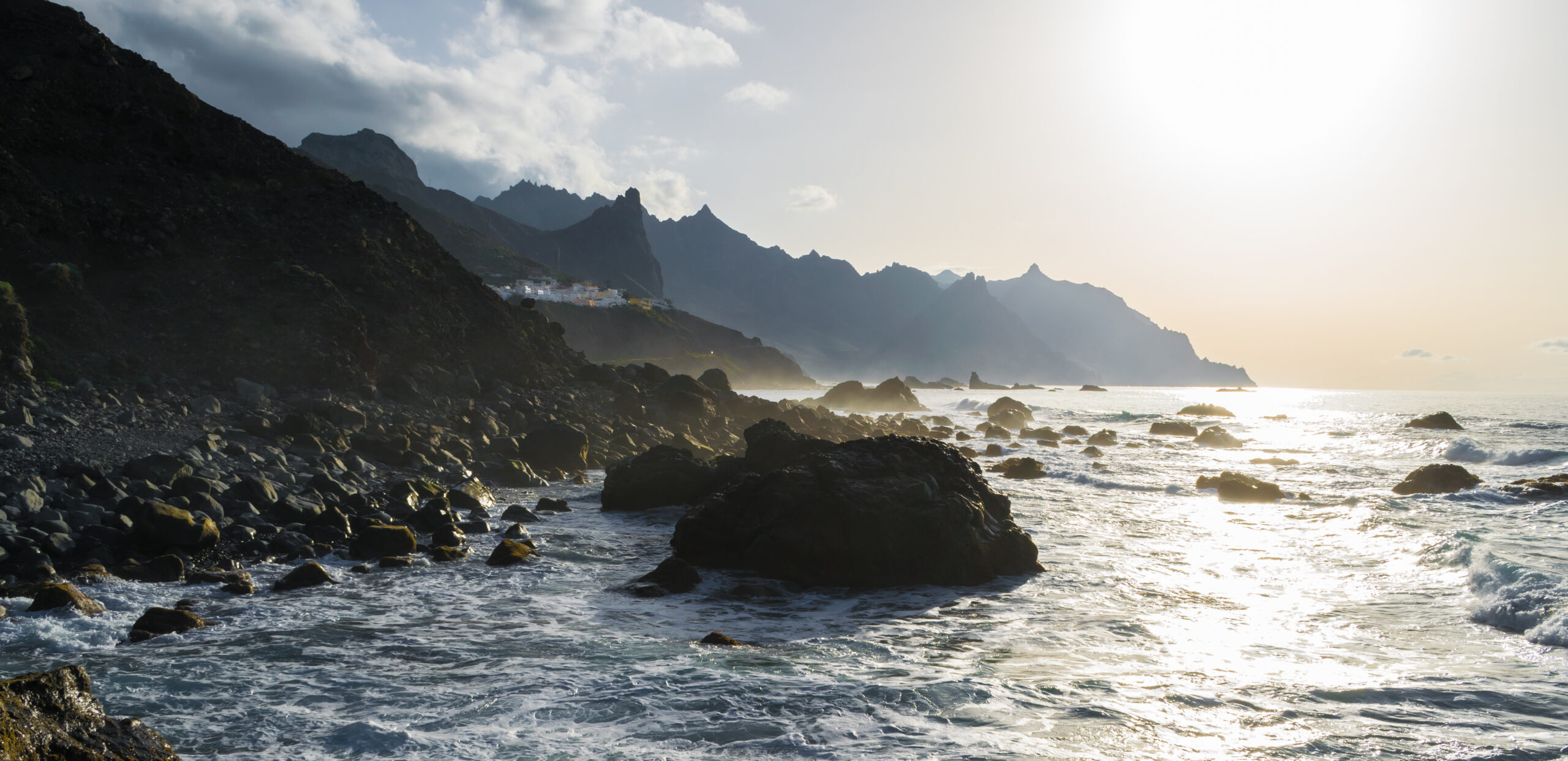
Tenerife’s beaches come in two colours. The island’s own sand is volcanic black; the broad golden beaches of the south were built for comfort. Staying in Los Gigantes puts both within reach — plus a third category many visitors miss: natural lava pools. (Blue Flag notes below follow the 2026 award list; flags change yearly.)
On your doorstep
Playa de los Guíos is the black cove directly beneath the cliffs, minutes from the marina: morning shade and a monumental backdrop, though it shrinks at high tide, so walk down rather than hunt for parking. Playa de la Arena, a 20-minute walk away, offers fine, glittering black sand with lifeguards, showers and cafés above. It is beautiful, and it asks for caution: the shore break is strong and red flags are common, so swim to the conditions.
Playa San Juan, 15 minutes away, is calm, local, and on the 2026 Blue Flag list.
Golden-sand days
Half an hour south, Playa de Las Vistas in Los Cristianos is 850 metres of breakwater-calmed golden sand — reviewers’ favourite thing to do in the town, and the safest bet with small children. Playa del Duque in Costa Adeje (Blue Flag 2026, thousands of reviews) adds parasols, palms and polish at matching prices. On the windier east tip, El Médano and La Tejita are the natural exception: real golden sand under a red volcanic cone, kitesurf sails everywhere. The wind is near constant: glorious for kites, blowy for towels.
Lava pools and wild shores
On genuinely calm days, do as locals do and swim in rock — the Charco Isla Cangrejo below the Los Gigantes cliffs (only when open: it is sealed during swell alerts, which must be respected without exception), Alcalá’s Charco de La Jaquita, or — worth the northern trip — El Caletón in Garachico, free pools formed by the 1706 lava flow (staffed in high summer, closed in heavy seas). The photogenic Charco de La Laja further east is a “beautiful but dangerous” favourite in reviews: north swell often makes it unswimmable, so treat it as a viewpoint unless the ocean is flat. And for drama over comfort, Playa de Benijo in the Anaga hills is the island’s wildest beach — black sand, sea stacks, steep steps, no facilities, sunsets that justify the two-hour drive.