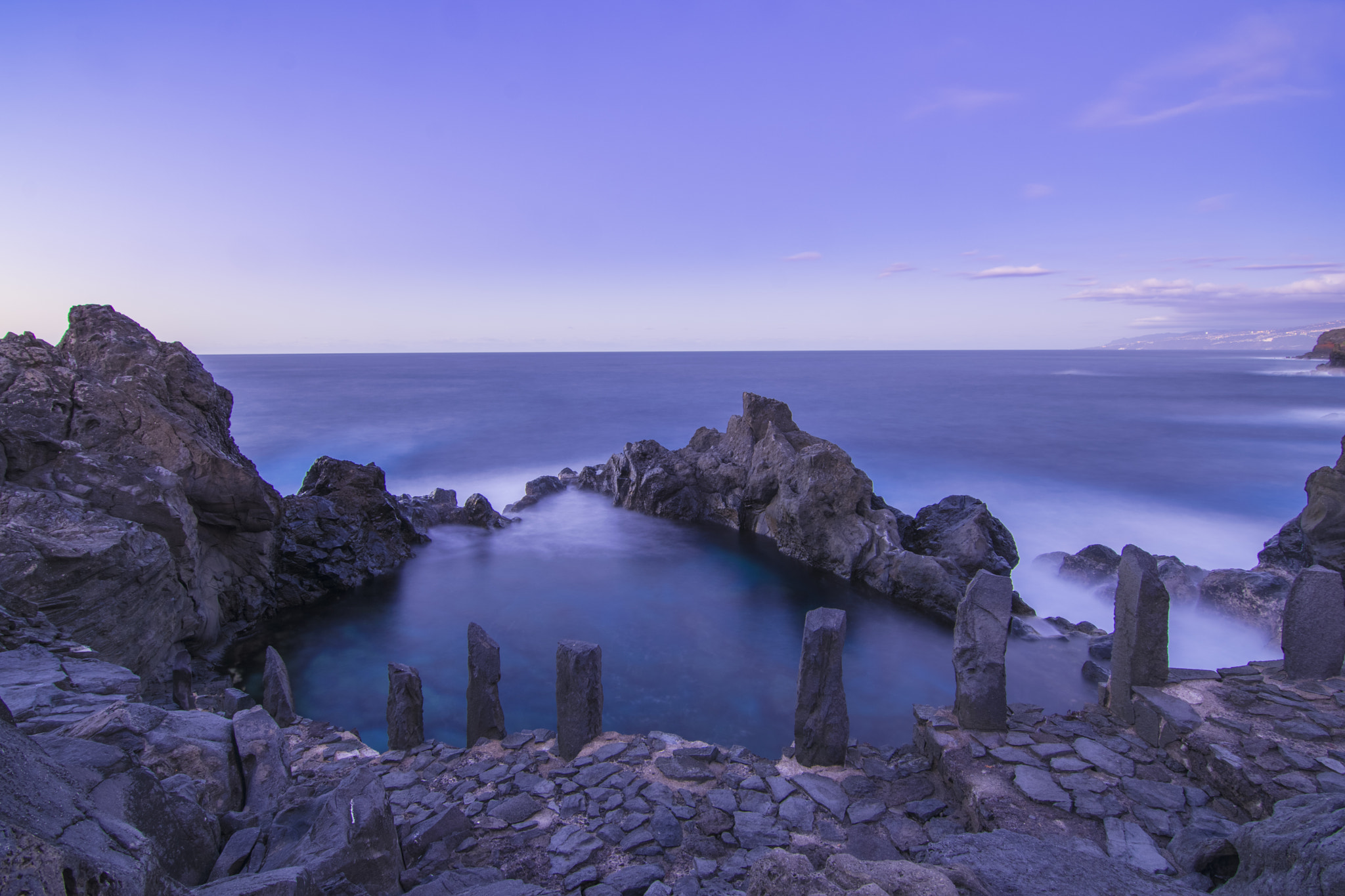
Where lava met the Atlantic, it left basins of clear seawater in black rock: charcos, refreshed by every tide. Swimming in one on a calm morning is the best free thing this island does. The same pools, in swell, are the most dangerous places on the coast — and that is not a figure of speech here. This guide holds both truths at once.
December 2025, at our own front door
The Charco de Isla Cangrejo sits below the cliffs a few minutes’ walk from the Los Gigantes marina: comfortable stairs, a sheltering wall, a lovely pool. On 7 December 2025, during a coastal alert, with the pool taped off, fenced and signposted in three languages, a wave came over the wall and swept some twenty people into the sea. Four died; one was never found. The barriers had been in place for days. This post exists so that no guest of ours ever ducks under one: when a charco is closed, it is closed because the ocean has already decided. Whether and when Isla Cangrejo reopens is a local decision — ask, and obey what you find.
The pools worth knowing
Closest to home is the Charco de La Jaquita in Alcalá (~15 min), the west coast’s most comfortable charco, recently improved and reached on foot along the promenade. The star is El Caletón in Garachico (~40–45 min): a whole complex of pools in the 1706 lava, free, in the town centre, with lifeguards in the summer season and closure practice locals actually respect. Charco Los Chochos at Los Silos (~50 min) is wild and lovely, a short coastal walk from the car park with no facilities at all — bring everything and check the tide.
Further round the north coast, Charco del Viento in La Guancha (~55 min) is a deep pool behind two lava arms, with rebuilt stairs and slippery rock; a calm-day-only proposition. Charco de La Laja at San Juan de la Rambla (~1 h) is the north’s most photographed pool, and its most instructive: in January 2025 police physically cordoned it off because visitors kept ignoring the warning signs in heavy seas. Bajamar and Punta del Hidalgo (~1 h 20) are the safe option — semi-built pools with Blue Flags (2026), lifeguards and easy access, the right choice with children or on a swell day.
The numbers, plainly
The Canary drowning-prevention association counted 69 drowning deaths across the islands in 2025, with Tenerife the worst island. Natural pools and rocky coast together accounted for over forty per cent of incidents. The figure that matters most: nearly half of those who died were in the water while an official coastal alert was active. The single biggest thing you can do for your safety here is free — respect the closures.
The local rules
- Swim at low or mid tide on calm days; October to March brings the big north swell.
- Watch the water for ten full minutes before getting in — wave sets arrive in groups, and a flat spell between them is the trap.
- Never turn your back on the ocean; wear water shoes (algae, urchins); no diving — depths change with the tide.
- If someone is swept in: throw something that floats and call 112 — do not jump in after them; rescuer drownings are a recurring pattern. If it is you: swim away from where the waves strike the rock, let the current carry you out until it weakens, signal, and wait.
- Take your litter, skip the shampoo — these pools breathe with the open sea.