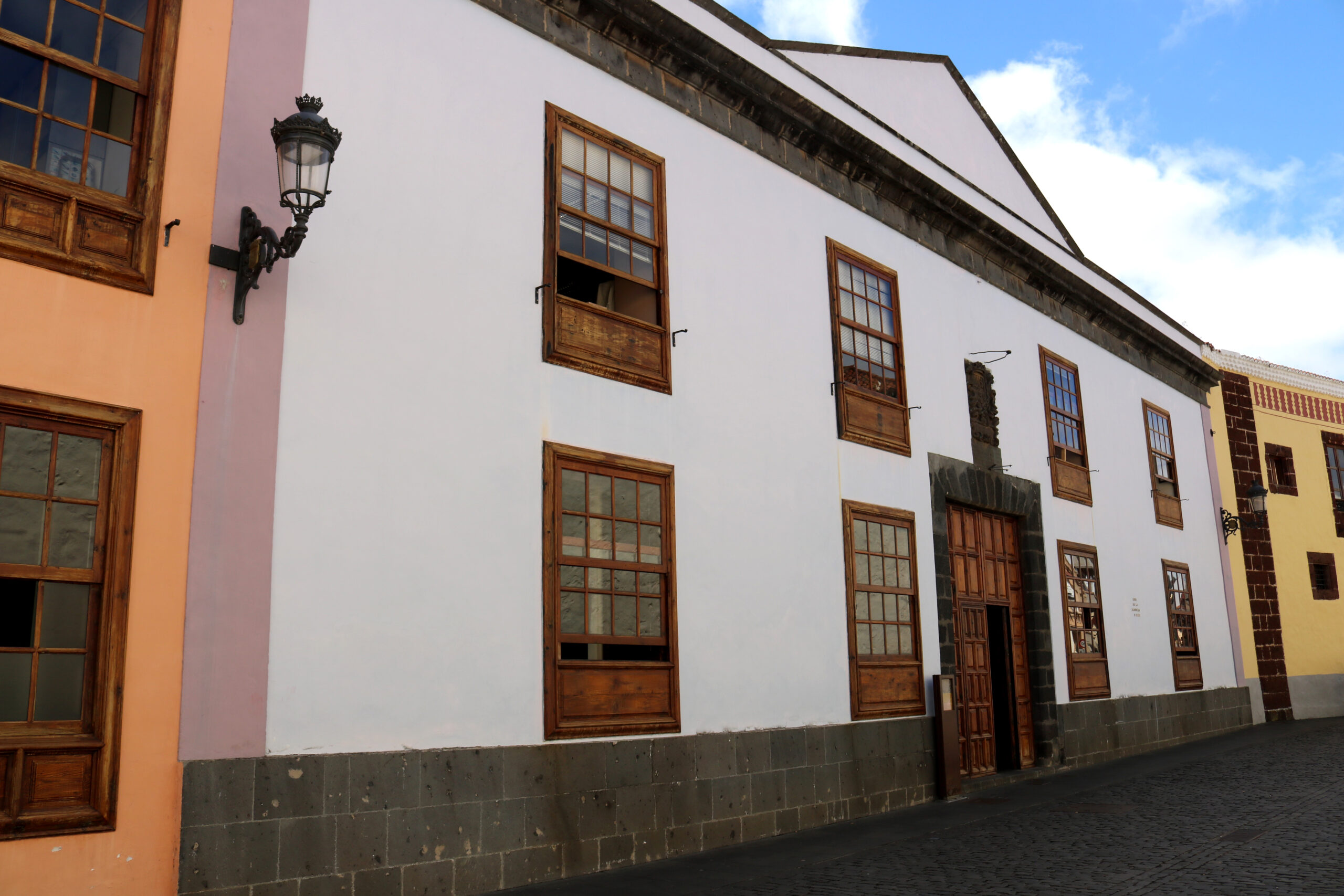
The north of Tenerife is where the island keeps its architecture: four centuries of merchant wealth written in dark balconies and whitewash. Learn four words and every old town opens up. Fees and hours below are as published in July 2026; small Canarian sites shift seasonally, so check before you drive.
How to read a Canarian building
Start with the tea-pine balconies: carved, covered galleries of pino tea, the resin-saturated heartwood of the Canary pine, so dense it shrugs off centuries. The best streets for them are Calle San Francisco in La Orotava, Plaza de la Pila in Icod and Calle San Agustín in La Laguna. Behind them hides the second word, the patio — austere facades open onto plant-filled galleried courtyards, and you can step into Casa Salazar in La Laguna (free) or Casa Lercaro in La Orotava (also free; it is now shops and a restaurant) to see the trick.
The third is the Mudéjar ceiling, geometric coffered woodwork inherited from Moorish craft: look up in Icod’s San Marcos and on the convent staircase in Garachico. The fourth is everywhere once you notice it — whitewash and basalt, lime render framed by near-black volcanic stone quoins, the signature contrast of every old street in the north.
La Laguna: the UNESCO grid
A World Heritage town since 1999, La Laguna’s unfortified grid became the template for Spanish colonial cities across the Americas. The one interior to pay for is Casa Lercaro, home of the island’s history museum (€5, and free on Friday and Saturday afternoons from four o’clock, the best hack in this post). The cathedral (€7 with audio guide, closed to visits on Sundays) claims Spain’s largest collection of Byzantine icons, and the Concepción tower — the city’s emblem — can be climbed for pocket change on Tuesday to Saturday. One warning: the famous Palacio de Nava facade is exactly that, a facade. The palace has stood empty for decades awaiting restoration, so admire it from the plaza and promise nothing more.
La Orotava, Garachico, Icod
La Orotava stacks its mansions up a hillside: the Casa de los Balcones (about €6; twenty rewarding minutes for architecture lovers, a craft shop for everyone else), the finest baroque church in the islands (visits Tuesday–Friday, late morning only), and a working seventeenth-century gofio mill still grinding on Calle Colegio. Garachico is the town a volcano froze: Tenerife’s richest port until the 1706 eruption filled its harbour, it rebuilt in slow stone and then simply stopped — which is why its plaza, convent (Mudéjar staircase inside) and the 1577 Castillo de San Miguel (€2) survive so completely. Icod keeps the treasure nobody expects: inside San Marcos church, a 2.4-metre, 47-kilo silver filigree cross made in Havana in the 1660s, reputedly the finest such work anywhere.
Planning the day
From Los Gigantes the natural pairing is Garachico plus Icod over the Erjos pass (about forty minutes to the first); La Orotava sits an hour away and pairs with Los Realejos, whose Santiago Apóstol church was founded the very day the conquest of Tenerife ended in 1496: the island’s first parish. La Laguna deserves its own day. Go Tuesday to Friday: Sunday closes the cathedral, Monday the tower, and La Orotava’s church keeps bankers’ hours.