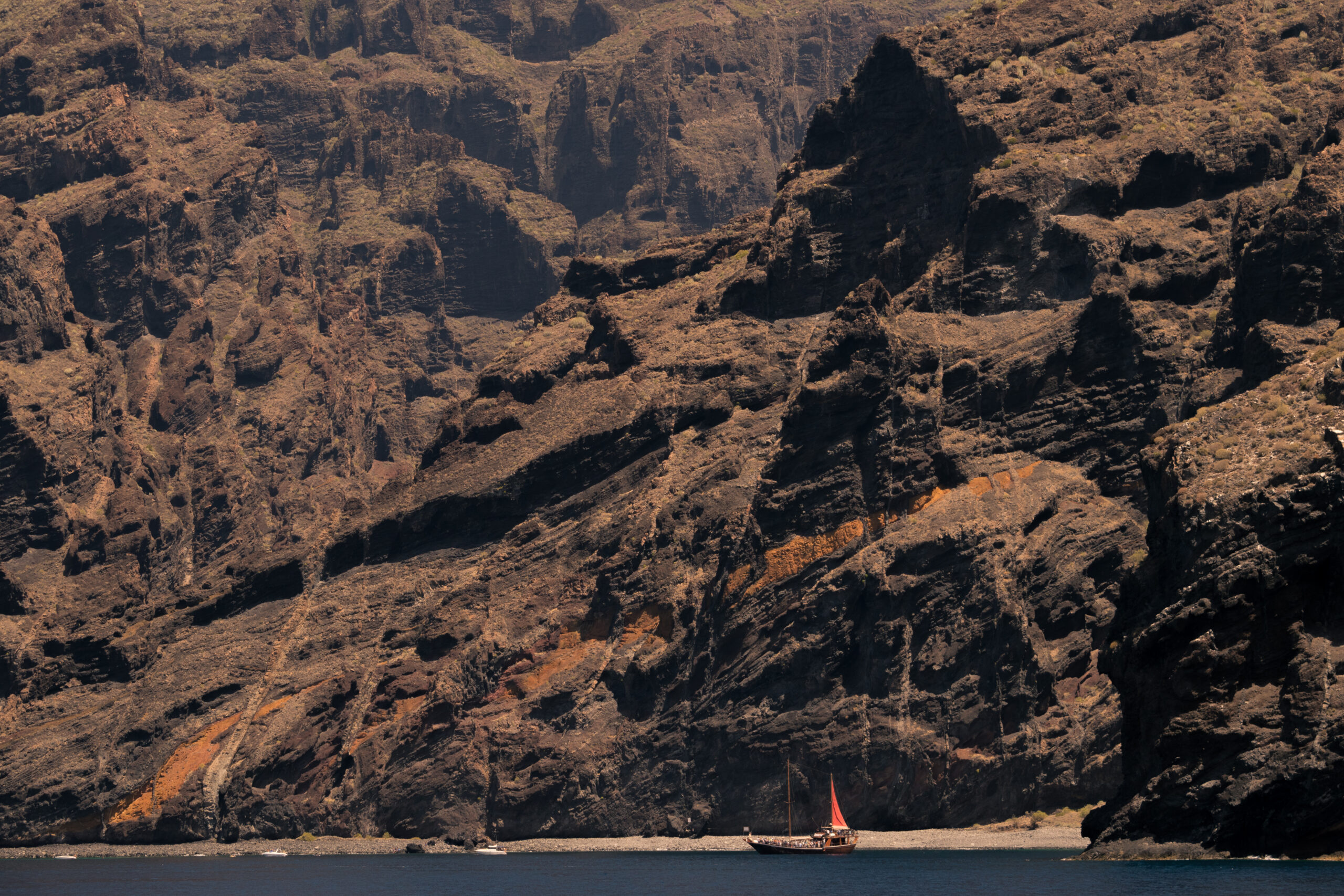
The cliffs of Los Gigantes are the exposed edge of the Teno massif — one of the three ancient volcanic buildings that later fused into Tenerife. Geological studies date Teno’s basalts to roughly six million years ago, among the oldest rock on the island; everything you see in the 300-to-600-metre face is stacked lava flows, dykes and ash beds, sliced clean by landslides and the patient Atlantic.
The wall of hell
To the Guanches, the aboriginal people of Tenerife, these cliffs marked the end of the world: chronicles record the name Muralla del Infierno — the Wall of Hell — and the belief that the waters below were bottomless. Guanche shepherds worked the high Teno pastures for centuries before the Castilian conquest of the 1490s; the inland village of Santiago del Teide, today’s municipal capital, grew from those uplands, its parish founded by royal decree in 1678 under Fernando del Hoyo Solórzano, Lord of the Valley.
Fire within living memory
This is also Tenerife’s youngest volcanic corner in human terms: the island’s most recent eruption began on 18 November 1909 at Chinyero, just up the valley inside this same municipality. It lasted ten days; the lava stopped short of the villages near Montaña de Bilma — a halt local tradition attributes to a religious procession — and today the stark black field is crossed by marked walking trails.
From fishing shore to resort
Until the 1960s the shoreline below the cliffs held little more than fishing boats and terraced tomato plots. Historical accounts describe the resort being laid out from the early sixties with British investment, around the natural anchorage that became today’s marina. It has stayed deliberately small ever since: low-rise, whitewashed, and still arranged around that same anchorage.