Canarian cooking is its own tradition — older than tourism, shaped by volcanic soil, Atlantic fish and a pre-Hispanic staple that survives on every menu. The dishes are simple, generous and inexpensive; the only barrier is the vocabulary. Here is the decoder, tested against what the menus around Los Gigantes actually say.
The holy trinity: papas, mojo, gofio
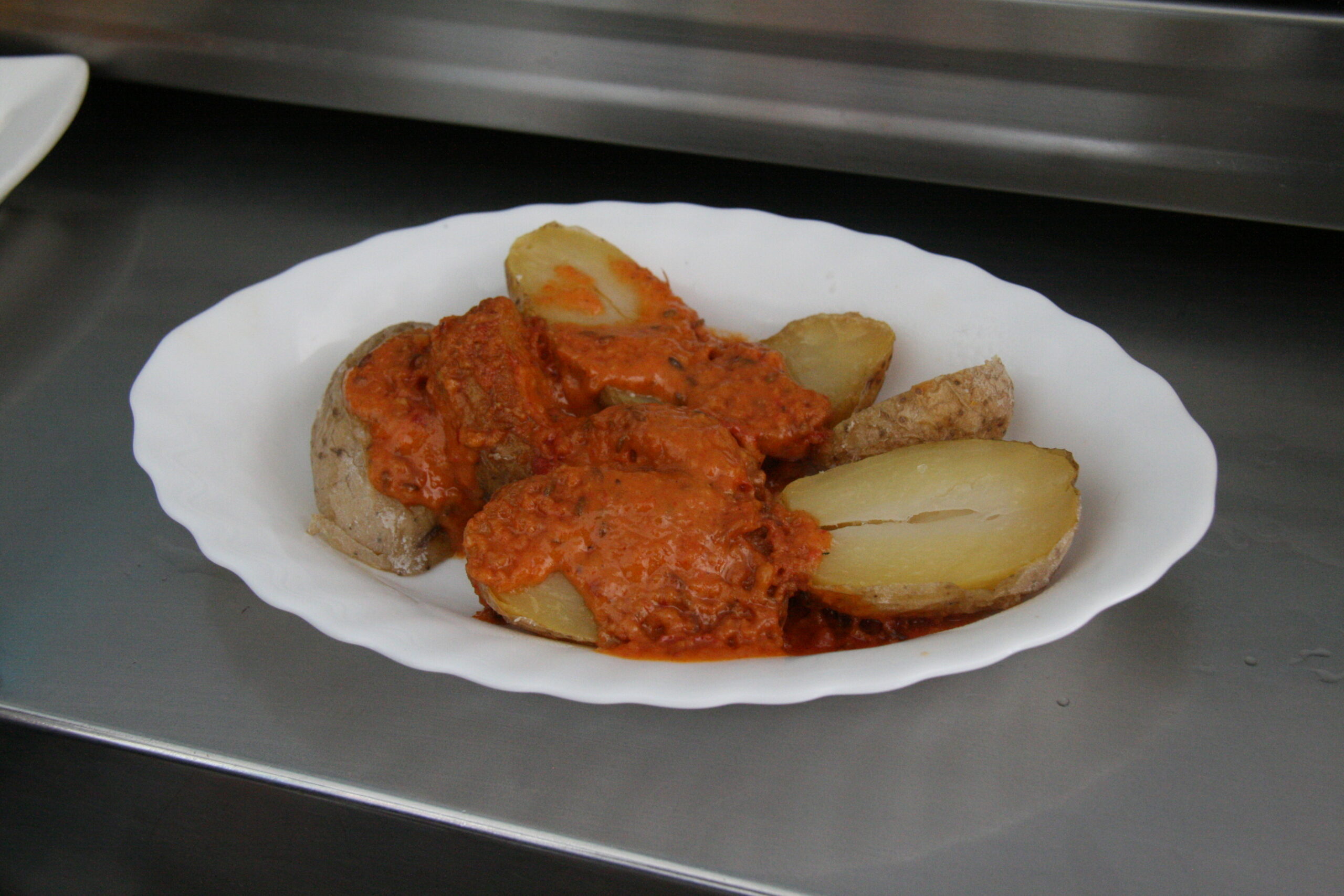
Papas arrugadas, the “wrinkled potatoes”, are small potatoes boiled in heavily salted water until the skins crease and frost with salt; you eat them skin and all. If the menu names papa bonita or papa negra, that signals heirloom varieties from Spain’s first potato denomination of origin, and the black-skinned, yolk-yellow papa negra is the connoisseur’s choice. They arrive with mojo, the two table sauces: rojo (red pepper and paprika, warm and smoky — picón means the hot version) traditionally with meat, verde (green pepper and coriander) with fish, though most kitchens bring both and nobody polices the pairing. Gofio is the oldest thing on the table: toasted grain flour inherited from the islands’ first inhabitants. You will meet it as escaldón (whisked into hot broth to a savoury paste, scooped with raw onion), kneaded into a sliceable log (pella), or folded into cream as the ubiquitous mousse de gofio dessert. And almogrote, the fierce spread of aged goat’s cheese, garlic and peppers, comes from La Gomera — the island filling your horizon at sunset.
Reading the fish list
Cherne is wreckfish: thick, white, satisfying fillets that menus sometimes translate as sea bass (it is better). Vieja, parrotfish, is the local favourite, usually simply boiled or grilled, while chicharros are small jack mackerel, cheap and fried — the fish that gave Santa Cruz natives their nickname, chicharreros. Sama and bocinegro are local sea breams, and lapas are limpets, grilled shell-up with mojo verde and eaten the moment they arrive. Despite the name, sancocho canario arrives not as a soup but as salted fish poached with potatoes and sweet potato, with mojo and a slab of gofio — the classic Good Friday lunch. As for the cooking terms: a la plancha means flat-grilled, frito fried, a la espalda butterflied open and finished with hot garlic oil, and a la sal baked in a salt crust.
The meat side, and two famous false friends
Conejo en salmorejo is rabbit marinated in garlic, paprika, herbs and wine vinegar, fried and simmered — no relation whatsoever to Córdoba’s cold tomato soup of the same name. Costillas con piña is the other trap: piña here means corn on the cob, not pineapple — salted pork ribs, potatoes and corn, a country classic. Carne fiesta is cubed pork in the same paprika-garlic marinade, fried and served in a heap, the taste of every village fiesta. Look too for garbanzas (a chickpea and pork stew), the Canarian ropa vieja (shredded meat with chickpeas and potatoes; the Cuban dish is its descendant), and queso asado con mojo: goat’s cheese seared on the grill, topped with mojo and often palm honey. Tenerife’s farmhouse goat’s cheeses are excellent, for the record, even though the archipelago’s protected cheese names all belong to other islands.
Sweets and the local wine
Dessert menus repeat a reliable cast: quesillo (the firm Canarian flan made with condensed milk), bienmesabe (“tastes-good-to-me” — a thick almond-honey cream, often over ice cream), frangollo (cornmeal pudding with raisins and almonds), príncipe alberto (a chocolate-almond mousse from La Palma, named, the story goes, for a visiting Monaco prince), and at Christmas truchas, half-moon pastries filled with sweet potato or almond. The almond ones connect to our own valley: Santiago del Teide is almond country, at its best during the February blossom. As for wine, Tenerife alone holds five denominations of origin, and the local one is Ycoden-Daute-Isora, covering the north-west including Santiago del Teide — historically famed for whites from the Listán Blanco grape, while Listán Negro makes the island’s signature light, peppery red from ungrafted vines phylloxera never reached. Finish like a local with a barraquito: condensed milk, Licor 43, espresso and frothed milk in careful layers with cinnamon and lemon peel (ask for it sin licor before a drive), or a glass of ron miel, the Canary honey rum that appears unbidden with the bill.
Menu culture in five lines
- The weekday menú del día (starter, main, dessert, bread and a drink at a fixed price) is Spain’s great lunch institution, and surveys put the Canaries among the cheapest regions for it — around €13 in the 2025 industry survey.
- A tapa is a saucer, a ración a sharing plate; one ración per person across the table is the usual arithmetic.
- The bread and mojo that land unasked are customarily charged, a euro or so per head. Decline them if you wish; it is a custom rather than a scam.
- Tipping is relaxed. Locals round up or leave a euro or two, and ten per cent is generous anywhere.
- Guachinches — the pop-up eateries where a wine-growing family serves its own new wine and a three-dish menu — are a north-island institution, open roughly from the new wine in late November until it runs out in spring. The name gets borrowed loosely near the resorts; the real thing means a drive north, and it is worth it.
Photo: Tamorlan, CC BY-SA 3.0 (https://creativecommons.org/licenses/by-sa/3.0), via Wikimedia Commons