Nobody plans to need this page — which is exactly why it exists. Details below were verified against official sources in July 2026; phone numbers and rotas change, so the official links are given wherever they matter. Nothing here replaces medical advice.
In an emergency: 112
One number covers medical, police, fire and sea rescue, free from any phone, 24 hours a day. The Canary Islands’ 112 centre answers in Spanish, English, German, French and Italian, with interpreters for dozens more languages. Call it for chest pain, stroke signs, breathing difficulty, heavy bleeding or unconsciousness, give your location first (street and urbanisation; the town is Puerto de Santiago, municipality Santiago del Teide), and stay on the line. On the water, 112 works too; Salvamento Marítimo’s direct line is 900 202 202, and boats use VHF channel 16.
Where the hospitals actually are
- Closest 24-hour emergency department (private): Hospital Quirónsalud Costa Adeje, San Eugenio (roughly 25–30 minutes) — walk-in, adult and paediatric. Hospiten Sur in Playa de las Américas (about 30–35 minutes) is the long-standing tourist-oriented private ER, multilingual and used to dealing directly with travel insurers.
- Closest public A&E: Hospital del Sur at El Mojón, Arona (roughly 35–40 minutes) — a full 24-hour emergency service, adult and paediatric, treating some sixty thousand emergency patients a year. The island’s big reference hospitals (La Candelaria, HUC) are over an hour away; for the most serious cases the ambulance decides where you go.
- Out of hours nearby: the public night-urgencias point closest to Los Gigantes is in Alcalá (evenings through to morning), with daytime urgent care at the Guía de Isora health centre. When in doubt, call 112 rather than driving to a closed door.
EHIC and GHIC: what they really cover
The EU EHIC and UK GHIC entitle you to medically necessary state treatment on the same terms as residents. That means the public system only: the local GP surgery (there is a small consultorio on Calle El Herrador in Puerto de Santiago; it is a doctor’s office, not an emergency unit) and public hospitals like Hospital del Sur. Bring the card plus your passport. It does not cover the private clinics that dominate the tourist coast, prescriptions are part-paid rather than free, and there is no repatriation cover — which is why travel insurance remains essential even for EU citizens. At a private ER without it, expect to pay up front.
Pharmacies: your first stop for small things
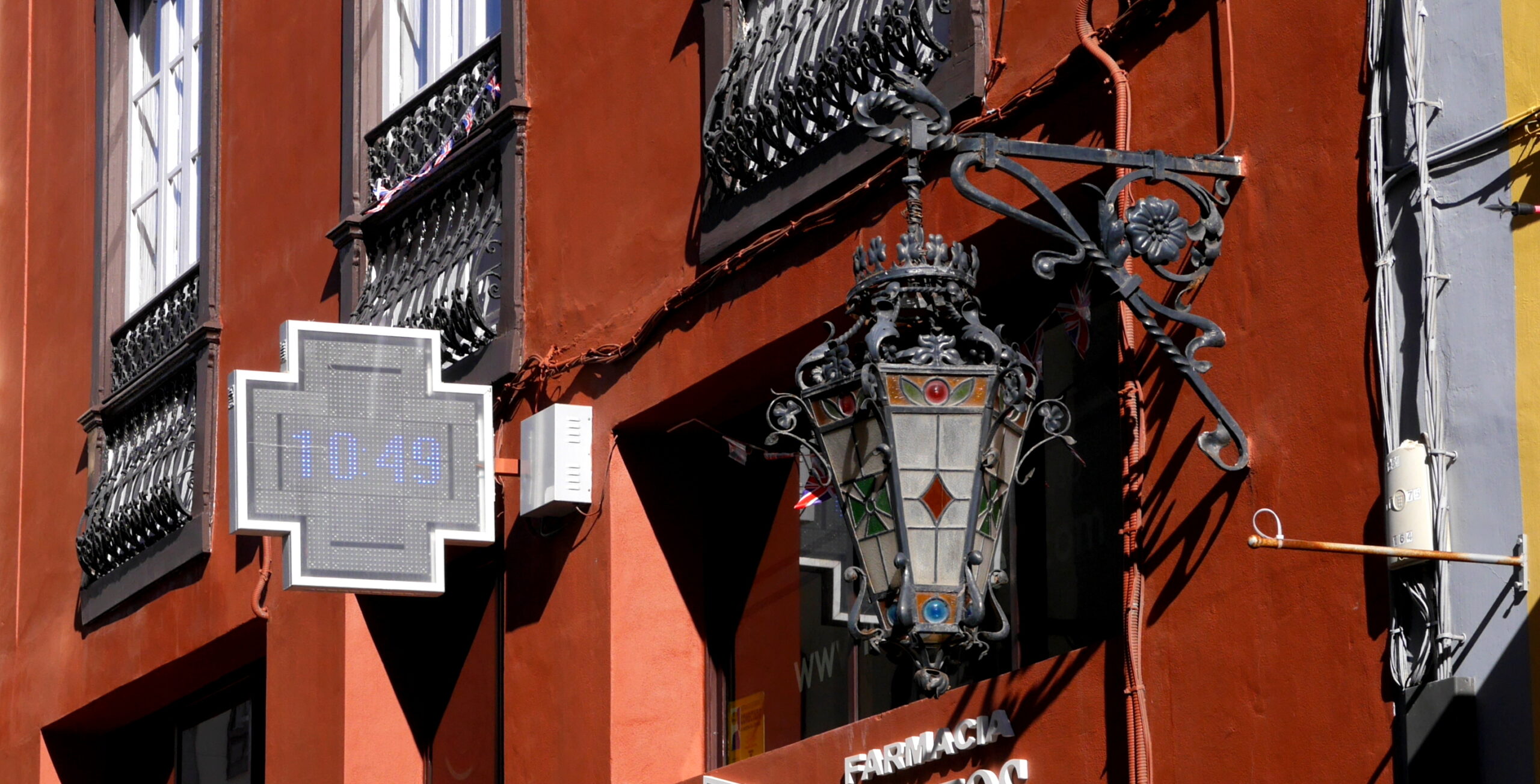
Spanish pharmacists handle minor ailments with real authority, and plenty of medicines kept behind prescription walls elsewhere are available over the counter here (antibiotics, officially, are not). Locally: there is a pharmacy on Calle Flor de Pascua in Los Gigantes itself, another on Avenida V Centenario in Puerto de Santiago with long weekday hours, and the most useful one to remember at Playa de la Arena, open every single day including Sundays. Pharmacies close at night, but you are never left without one: they take turns staying open, so somewhere between Santiago del Teide and Guía de Isora one pharmacy is always on duty, and which one changes from day to day. Every pharmacy window posts tonight’s duty address, and the full rota is at coftenerife.es.
Travelling with regular medication? Bring more than you need, keep it in its original packaging and carry a copy of the prescription or a doctor’s letter. If you do run out, be ready for one extra step: an EU prescription that meets the cross-border rules may be accepted at the pharmacy directly, but most visitors, including those from the UK, will first need a local doctor to write a Spanish one, either at a private clinic (roughly €50–100, English spoken, July 2026) or, with a GHIC or EHIC, as a temporary patient at the public health centre in Puerto de Santiago. One firm exception: controlled medicines such as opioids, sleeping tablets, benzodiazepines and ADHD drugs are very hard to have re-prescribed here — pack your full supply and a doctor’s letter for those.
The small stuff, quickly
- Sunburn — shade, cool showers, aftersun and water; the west coast is the hottest corner of the island, and children burn through cloud.
- Jellyfish: out of the water, rinse with seawater (never fresh), no rubbing; lifeguard or pharmacy next, 112 for breathing trouble.
- Sea urchins — a rocky-entry classic: tweezers for visible spines, a hot-water soak for the pain, disinfect, and see a doctor if spines sit deep.
- Dental: multilingual dental clinics in Los Gigantes and Puerto de Santiago advertise emergency slots; call ahead.
Photo: Ronny Siegel, CC BY 3.0, via Wikimedia Commons